Three Concepts Aspiring Writers Should Know
More people than you might imagine harbor dreams of writing. I know this because when someone learns I’m a writer, I often hear some version of, “I’ve always wanted to write."
When I ask why they haven’t, the answer is usually the same:
“I don’t have time.”
I don’t buy it. For many aspiring writers, time isn’t what holds them back.
Fear is.
Fear hides behind procrastination and other stalling tactics until the desire to write withers into little more than wishful thinking. It’s an easy trap for novice writers because many harbor romanticized notions about the process but haven’t yet learned what experienced writers discover through years of trial and error.
If you want to benefit from someone else’s trial and error, here are three concepts I wish someone had shared before I started.
Reading Is Linear… Writing Is Not
When we read a great novel, it’s a linear process. We start at the beginning of the book and finish at the end.
While most of us know better, it’s too easy to imagine the writer penning the work in a linear fashion. This gets lodged in our brains as we sit down to write. Then, if we become stuck trying to perfect the first sentence or paragraph, we get frustrated.
Over many years of practice, I’ve learned this: it’s hard to write well if frustration is your primary emotion while doing it.
Let me give a quick analogy.
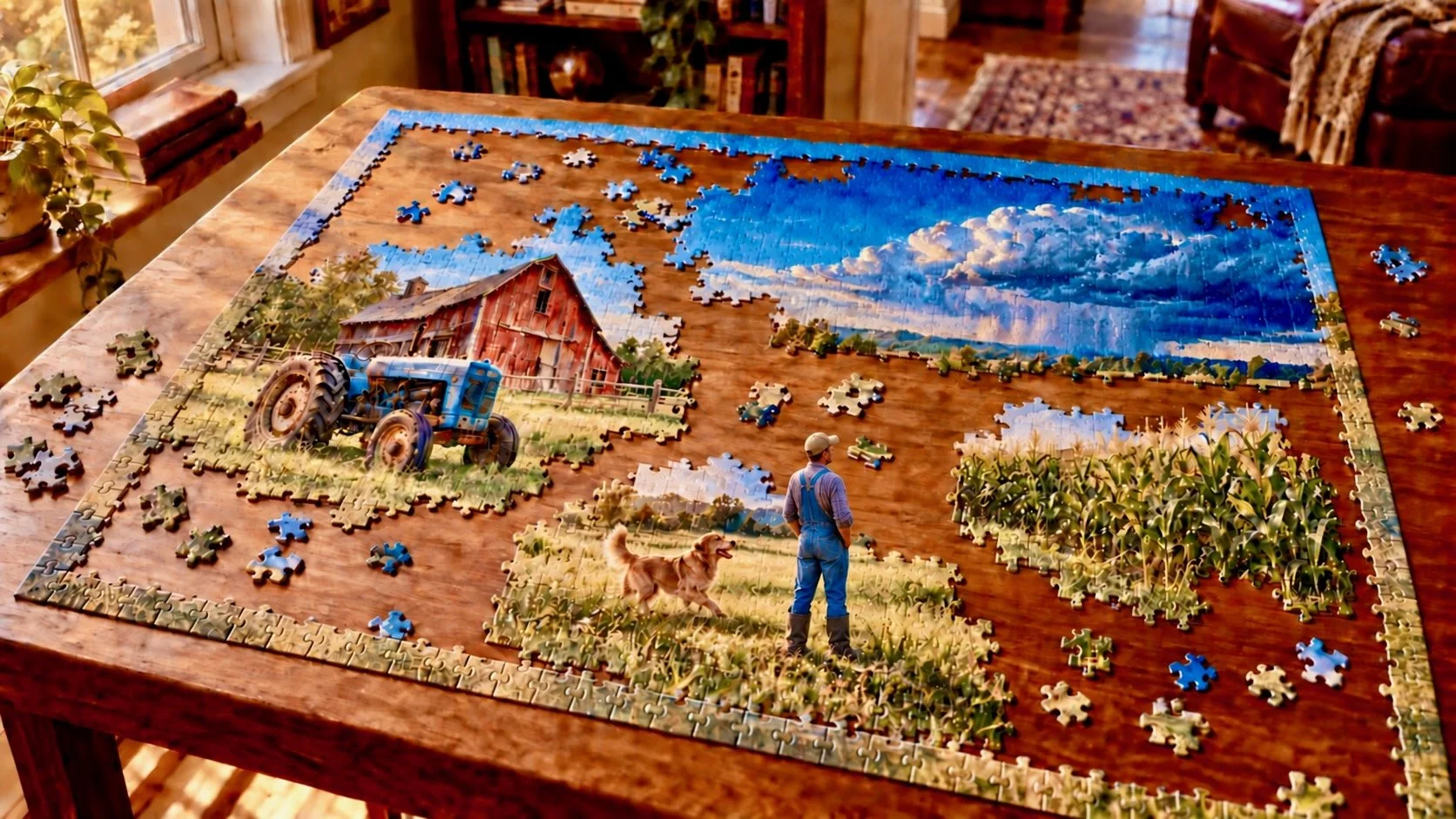
If you’ve ever completed a traditional jigsaw puzzle with many pieces, think about how you did it. After turning the puzzle pieces face up, I'm guessing most of you worked on the frame by connecting all the outside edges until you had a large rectangle.
Then you worked on the easy stuff. An old blue tractor in front of a red barn. A dog loping through the grass near a majestic cornfield. A farmer wearing overalls studying a thunderstorm in the distance.
Once you finish those images, floating untethered in their relative positions, you turn to the tedious work of connecting them using puzzle pieces of similar colors, like green grass and a vast expanse of blue sky. At this point, it’s simply hard work because you don’t have as many visual clues to align the pieces. But you want to finish your masterpiece, so you persevere to get the job done.
Let’s back up.
Imagine you love assembling jigsaw puzzles using the method above, but a crusty authority figure issues a supreme command.
“From now on, you must complete the puzzle from left to right, with no exceptions. You must interlock every piece on the left edge until that column is complete. Then, you must connect all second-column pieces before moving to the third column.”
This would be a mind-numbing way to complete a jigsaw puzzle, even for those who usually love doing them.
It’s also a mind-numbing way to write a piece of any length.
But some novice writers sit down to do it that exact way.

If you have a book idea, you probably already have a scene—or many— in mind. If that scene happens to be at the beginning of the book, you may feel compelled to write it. But what if that scene happens midway through the book or near the end? Or if you don’t know where it will eventually land? Should you wait to write that scene until you’ve written all the scenes before it?
No.
Write that scene now. Release it from your head and onto the page no matter where it will end up in the linear progression of the book. Don’t worry if it’s not perfect. You will have to edit and refine it at some point. But you will sabotage yourself and that scene if you wait to write it until after you’ve written all the scenes before it.
And unlike assembling a jigsaw puzzle with the luxury of checking the box top to guide the finished product, we usually don’t have a clear idea of how the final story will look. Writing down the key scenes you have in your head now will free mental space to work on the connective tissue that binds them.
This will also lead to other vital scenes needed for the final draft.
Tale of Two Writing Modes
I don’t hear many writers talk about this, but I believe the best ones know it instinctively or through trial and error. Successful writing comes from becoming adept at two distinct writing modes. Combining the modes usually leads to frustration, and I’ve already mentioned why you want to minimize that emotion.
What are these writing modes?
I call them the creative mode and the editing mode. Both should be used separately. I like to think of creative mode as building the raw block of stone I will later sculpt in detail, chipping away everything that doesn’t match my vision for the piece.
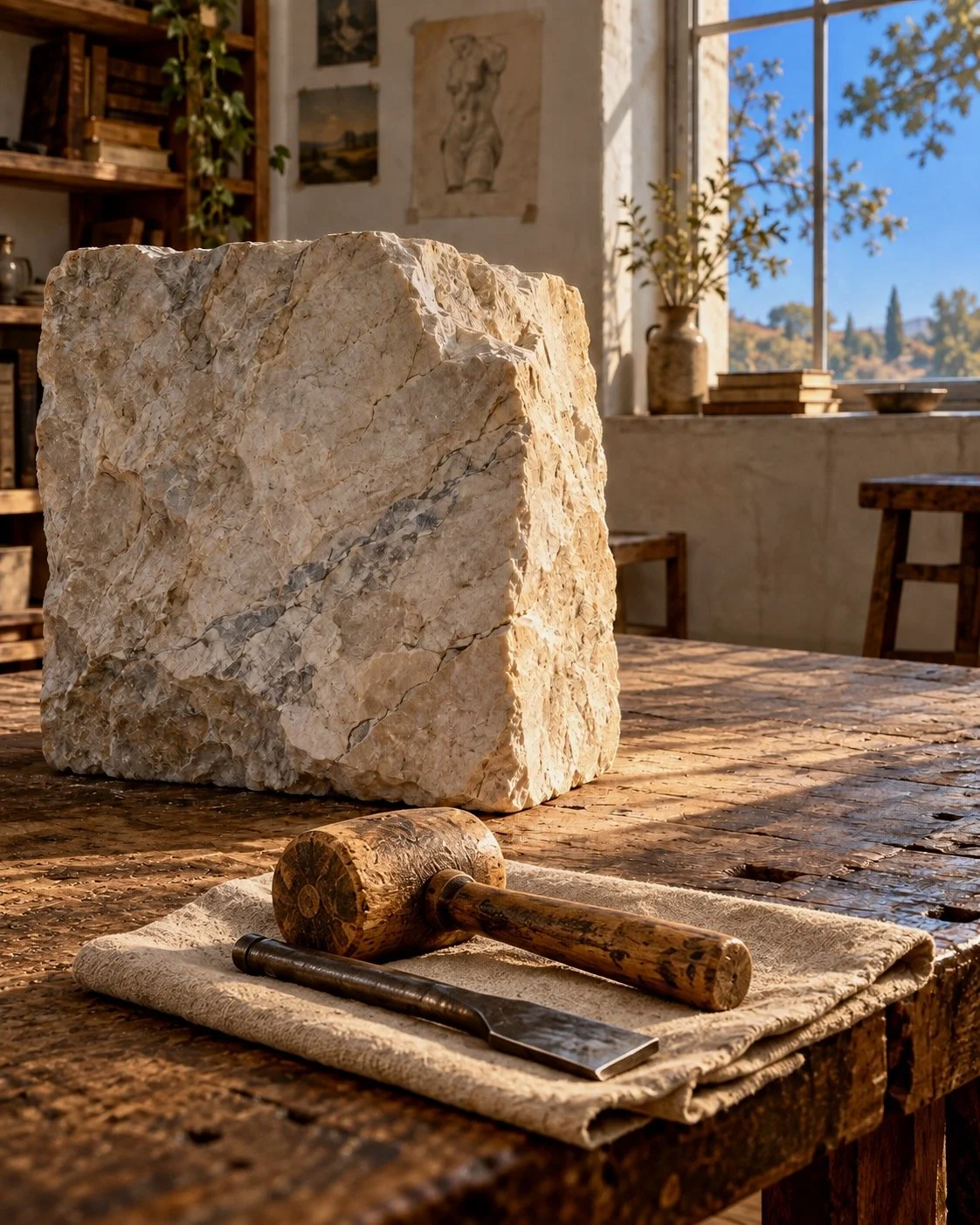
Writers aren’t as fortunate as sculptors who have beautiful, raw blocks of marble delivered to their studios so they can chip away to reveal the masterpieces within. Instead, writers must create the raw blocks of stone themselves. To do this, one must get everything onto the page, including the good, the bad, and the ugly.
Later, we carve away the bad and the ugly using the editing mode so only the good is left. Or so we hope. Then, we continue with a second editing mode session. Or three. Or four. We keep refining and elevating the piece until it’s ready.
You may be wondering how to best create your raw block of stone.
Start by banishing your inner critic. Barricade the ugly monster outside the door. Be assured it will huff and puff and beat on the threshold, demanding to be let in.
But you must be strong. If you can’t muster the strength to silence the inner critic during the creative mode, you will forever struggle when you write. Once you’ve shown the nasty monster who’s boss, it will slink away, leaving you to write, write, write.
At this point, let everything pour out. Don’t worry about spelling, grammar, word choice, or any other writing advice your ninth-grade English teacher tortured you with, including how it’s not legal in 48 states to end a sentence in a preposition or use a fragment. DO NOT, for any reason, stop writing to edit while you are in creative mode.
I know. It’s hard to do.
The temptation to edit is monumental when writing on a computer, especially when you can slice a sentence in two with your cursor and wreak havoc with the delete button. If you have trouble resisting the temptation, take a page from my book and use a good old-fashioned notebook.
I’ve mostly trained myself to avoid editing when using a computer during creative mode. But the dangerous urge still wells up on occasion.
Most of the time, I resist.
But if the impulse becomes too strong, I whip out an old-school notebook and trusty ink pen to write longhand. This technique removes the temptation to edit and lets me focus on getting all thoughts from my head onto paper.
WARNING
When you spew everything onto the page in creative mode, you will likely cringe at the junk you’ve produced.
I do.

That’s okay. It happens to the best writers. But write this way often enough, and raw gems emerge from the junk. Later, after you remove the bad and the ugly in editing mode, you polish these gems to a gleaming shine to make something beautiful.
But before you do, put some space between creative and editing mode by walking away from the piece for a while. It will look much different when time has passed, making much of the necessary editing work more apparent.
Want more good news? The more often you write, using the creative mode followed by the editing mode at a later time, a benefit typically occurs. Over time, your writing during creative mode needs less editing. Your brain automatically incorporates some of your sharpened editing skills before the words hit the page.
I’ve mentioned these modes should be kept separate, but there are exceptions. When I knowingly sit down in creative mode, I rarely let myself drift to editing mode. After all, I’m in that mode to build my block of stone.
But I never hesitate to drift from editing mode to creative mode if something sparks my imagination, and I must get a series of new thoughts down fast. It’s easy to return to editing mode when needed. But if you consistently let yourself drift from creative to editing mode, you not only short-circuit your creative process but also develop negative habits that will stunt your growth as a writer.
Train Your Brain
With some exceptions for prose prodigies, excellent writing is a small percentage innate talent and an overwhelming percentage of hard work to learn the craft while building solid writing habits. To do this, you must train your brain.
Outstanding accomplishments happen with training and practice. Ask any millionaire, sports figure, or Grammy-winning singer.
But some think you can write a great novel without serious, consistent practice. Writing is difficult to do well if you’ve never trained your brain to write often over time. Magic happens when we develop good writing habits.
Below are worthy ones to establish:
Write often.
Write often, even if only for a short period. Daily is best, and anything is better than nothing.
Learn to clear your mind of life’s endless distractions for a predetermined time. Sorry to break it to you, but you will never get all your non-writing tasks done anyway. Train your brain to block those to-dos out for a short time so you have a clear mental space to write.
Use creative mode often, without editing, so you create numerous blocks of stone to work with at any given time.
Write often. (Did I mention that one already?)
Embrace the above, and you will strengthen the neurological pathways in your brain to become a better writer. But know this: if you are a fledgling writer or haven’t done it in a while, expect low quality before you get high quality.
This shouldn’t need explaining, but I bring it up because many beginning writers get frustrated when their perfect story concepts don’t transfer perfectly from their minds to the written page.
Many aspiring writers have read published works and thought they could have done better. But excellent writing is more complex than it looks.
We may learn it took an author nine months to write the novel we read, but does that convey the full picture? It may have taken the author nine months to produce and assemble the words in a pleasing manner, but developing the skill to do it fast and well may have taken twenty years.
You’ve probably heard my advice to write daily from someone else. That’s not surprising because it’s sound advice for aspiring writers.
But what’s missing, and where fledgling writers often stumble, is that they believe they must write something good, or even great, every day.
Not true.
Permit yourself to write badly at first. If you keep going, you will improve. But also know that everything you write is a culmination of all you’ve written before it.
Those crumpled pages in the trash can from yesterday’s lousy writing session will help your progression as a writer if you don’t let too much time pass between sessions.
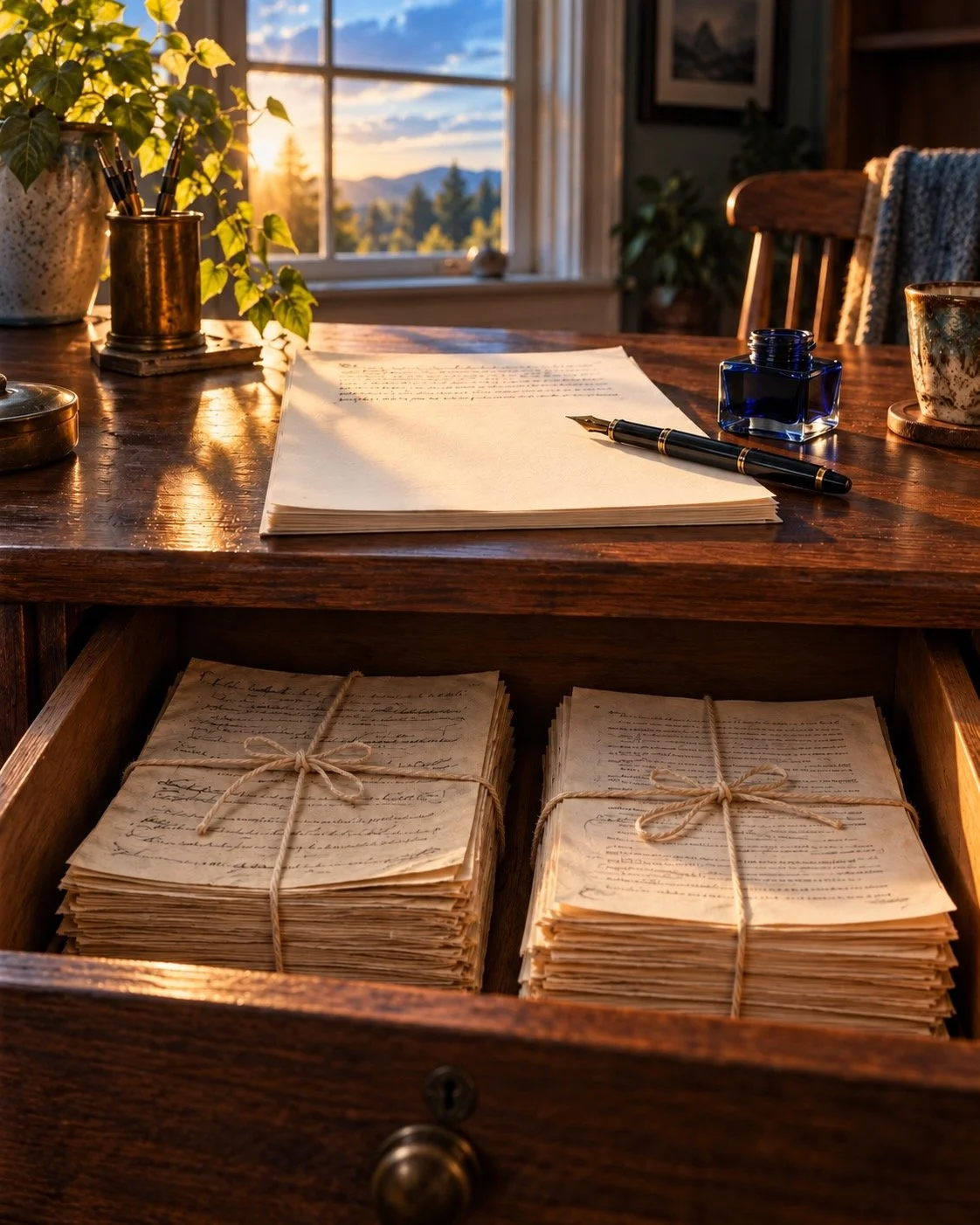
New York Times bestselling author John Hart has two unpublished novels sitting in a desk drawer. But he knows those first two efforts weren’t wasted. They trained his brain to write better.
Some last words on this from James Thurber:
“Don’t get it right; get it written.”
This applies to training your brain and writing in creative mode. Mr. Thurber was a better writer than I because he explained the creative mode in seven words instead of the hundreds I dedicated.
Writing well is not a mystical ability granted to a chosen few. If you love words and descriptions and stories, you can learn to write better. But it takes concentrated effort.
Now go write.
Your block of stone is not going to create itself.
If there's a story in you that fear keeps unwritten, consider this proof it can be done: Flying Colors is the story of a man who stops waiting for his real life to begin and trusts the messy first draft of it. The opening chapters are free in the footer below.