Is AI Pulling Us Away From Real Life—or Leading Us Back?
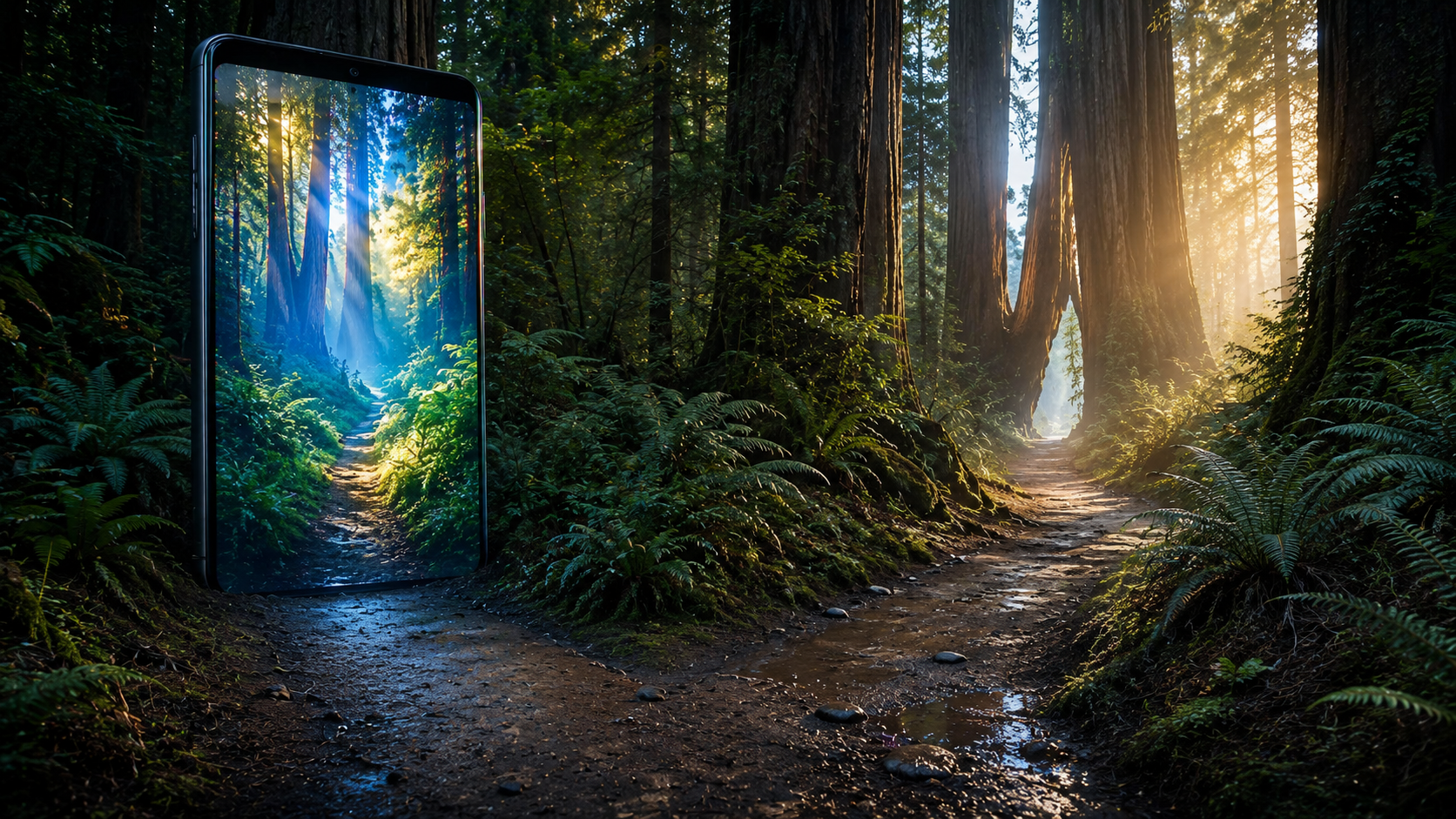
Social media pulls me in two directions.
I like how it helps me keep up with family and friends, near and far. I love seeing their milestones, getaways, and ordinary moments. Even sad posts about the loss of a loved one or beloved pet help me hold those people closer in my thoughts.
It has also put my writing and novel in front of people I might never have reached otherwise—sparking online friendships and invitations to faraway places, including, once, a castle in France.
For those reasons, I keep returning.
But a short while back, while scrolling through reels, a video reminded me why I sometimes want to pull away.
Two raccoons ambled down a walkway, seemingly oblivious to the human filming them. The person moved, and both creatures froze, suddenly aware they weren’t alone. One raccoon actually stood upright, arms sticking straight out, its masked face looking comically guilty.
I laughed out loud, but a sudden question cut through the moment:
Is this real or AI?
A quick online search pointed to authentic footage. And I learned startled raccoons sometimes freeze in goofy, human-like poses. The answer reassured me, but it couldn’t fully restore the uncomplicated pleasure of believing my own eyes.
Still, the experience left me with a broader unease:
How much of what I see online is real?
Movies and television shows have always created convincing illusions. But when we plop down to watch them, we understand the bargain.
Social media began with a different bargain. It promised an extension of life—a place to see photographs and videos of our friends, family, and often random strangers doing real things. Then came the polished poses, staged moments, and manufactured performances. Now AI can create entire realities that never existed.
The wonder and joy those posts inspire now carry a suspicious aftertaste.
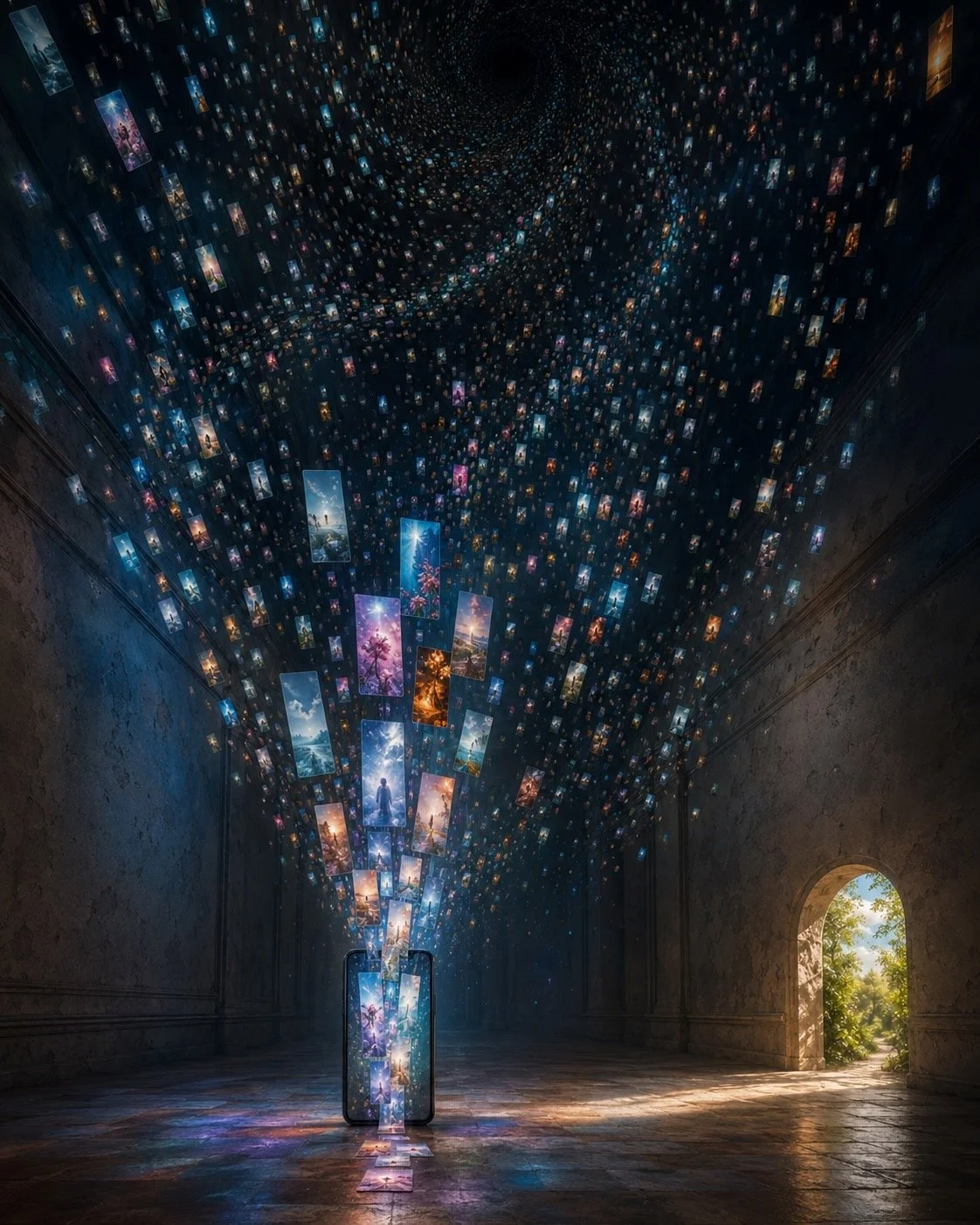
What happens to awe when doubt overshadows the extraordinary?
Maybe AI will make our feeds dazzling but ultimately so hollow that we lose our appetite for them. Like a sugar substitute, the first taste may be sweet, but the whole concoction never satisfies like the real thing.
A real sunset spilling fire across the horizon. A redwood forest rising from the earth like a living cathedral. The cold spray of a waterfall against your face. Salty ocean swells lifting your body and spirits before they crash onto a sandy shore.
Beauty and substance we can see, hear, touch, smell, and taste.
There is no substitute for the real thing.
But I’ve begun to wonder:
Could AI also lead us back to real life?
Sometimes we scroll because we want to connect, learn something, or laugh. Other times, scrolling offers a ready-made escape from something we’re afraid to begin.
In “Remember What You Came Here To Do,” I wrote that small distractions can become long detours from what matters. Social media makes that subtle avoidance effortless.
The task waiting for us may be something we desperately want to accomplish. But the more it matters, the higher the stakes—and the louder the fear becomes.
What if I get it wrong? What if it isn’t good enough? What if I have no idea what to do after the first obvious step?
Scrolling quiets those questions for a while. But it also steals time we could have used to answer them.
I experienced this while revamping my website. For seventeen years, I’ve posted essays and a selection of my magazine articles on it, but after publishing my novel, I needed an author-centric home for my work.
I’m technical enough to be dangerous. I can handle the basics, but when the work becomes complicated, I risk breaking something.
At the same time, I take pride in learning how to do things myself. That left me caught between curiosity and uncertainty: I wanted to update the site but worried my patchwork knowledge would keep it from looking polished.
I bought the right courses with the best intentions. But life got busy, and the lessons sat untouched, gathering digital dust.
Meanwhile, the website limped along while I tried to summon the courage to tackle it. Worse, the dread of fixing it drained energy from the very writing the site existed to support.
I’m all about the lift, but this pulled me down.

One day, I decided to approach AI differently. Instead of dwelling on how it made me question what was real online, I tested whether it could serve as a coach and instructor. Could it help me make tangible progress in my own life?
With little to lose, I asked it to research best practices, explain why they mattered, and break the project into tasks I could complete in twenty minutes or less—the maximum length of my attention span unless I’m completely lost in something, like writing.
If I got stuck, I asked AI to walk me through the next step.
No enrolling in another course. No disappearing down a tempting new rabbit hole.
I made quick progress on something I had postponed for far too long. More surprisingly, I stopped reaching for my phone to “take a break” whenever the work became difficult. I didn’t miss the endless reels from strangers who didn’t know me and probably never would. I was too busy moving forward.
That’s the paradox.
A real reel. Early morning at North Topsail Beach in North Carolina—June, 2026
AI can manufacture artificial lives for us to consume. But it can also help remove the obstacles that keep us from living our own.
Maybe the best use of AI isn’t generating more content to fill our screens. Maybe it’s helping us create the space to experience the real world beyond them.
The next time you find yourself caught in an endless scroll, pause long enough to ask what you might be avoiding. Put down the phone and, in the quiet that follows, decide whether the answer matters.
If it does, move toward it. If you get lost along the way, maybe your AI coach can nudge you in the right direction.
Write the paragraph. Make the call. Book the trip. Build the business. Step outside and discover something no algorithm has to convince you is real.
Then get back to what you came here to do.
Author’s note: It’s not lost on me that turning to artificial intelligence, instead of a human coach, to help you live more authentically carries this paradox one step further. A skilled coach offers something AI cannot fully replicate: the intuition and connection that can help you discover what you came here to do when the answer remains elusive.
That guidance can prove indispensable—and worth the investment.
I know this because I’ve coached writers trying to get out of their own way and people searching for purpose or whatever comes next. But few can afford a coach beside them through every step, and no human coach can remain available at all hours without neglecting their own life and work.
Perhaps the best approach combines both: a human coach to help you find your north star, AI to navigate the daily miles, and periodic live coaching sessions to keep you on course.